
Mistel Composite Aircraft
By Bill | Mar 12, 2024

We're all familiar with modern air-to-ground guided missiles, whether comparatively small things like Hellfire or larger beasts such as Storm Shadow, or the enormous anti-shipping monsters of the Cold War era. It's sometimes interesting though to look at some of the steps that were taken on the road towards modern systems, especially in an era when electronics were not nearly so developed.
One such step was the German Mistel series of composite aircraft; 'Mistel' is the German word for mistletoe, which is appropriate given that mistletoe is a smaller parasitic plant that lives on much larger hosts. Admittedly, the logic breaks down slightly when you realise that 'Mistel' was technically the larger of the two aircraft that made up the composite!
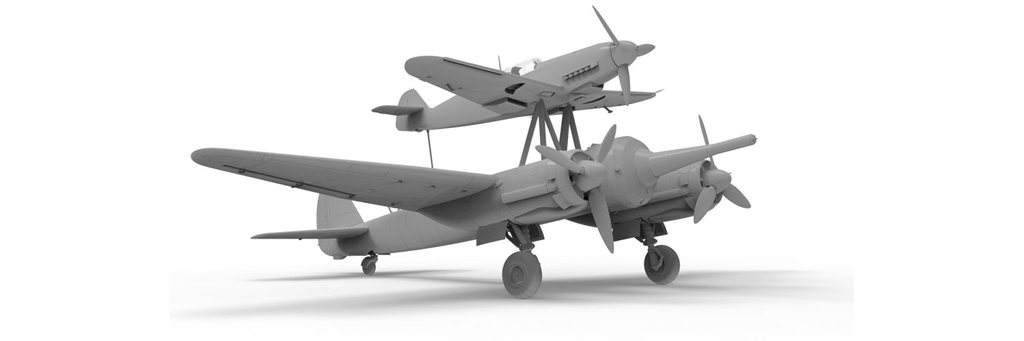
In the case of the first Mistel composite aircraft, the 'host' was a Ju-88, with the crew compartment replaced with an enormous shaped charge warhead (that pronounced 'snoot' being to ensure an appropriate stand-off distance between explosive and target); the 'parasite' was a Bf 109 fighter.
The basic idea behind the system was for the pilot in the fighter to fly the whole assembly to the area of the target, point the thing at said target, and then fly his fighter away before warhead impact. Fortunately for the Allies, although Mistels were used in combat (both in Normandy, and trying to hold up the advancing Red Army), their overall impact was rather limited; they were also fairly straightforward to shoot down if caught by fighters.
Besides the combat version, trainers were also produced, due to training on things with almost two metric tons of explosive on board being a risky proposition! These looked more like a fighter riding piggyback on a straightforward medium bomber.

The eventual development of more advanced electronic control systems made things like Mistel redundant, but they represent a fascinating corner of history for aviation enthusiasts.
The images used in this blog post came from ICM, who make a couple of rather splendid kits for fans of the more curious sides of military aviation; if you'd like to know more, please click here to be taken to the relevant LSG page (link opens in new window), or give the friendly folk in Sales a call!